
“Lovey.” Have you heard that term before? We at The Baby Sleep Site® use the term lovey to mean any comfort object that a baby or toddler brings to bed, and which provides comfort and soothing. Some people also call them ‘comfort objects’ or ‘transitional objects.’ While not every baby or toddler attaches to a lovey, many do. And as many parents have found (maybe you’re one of them!), loveys can be great! They can provide children with a physical object that they can use to comfort themselves.
Baby Lovey – What Is It?
Really, a lovey can be anything that’s safe for a baby or toddler to have at sleep time. Most loveys are what you’d think of as “normal” comfort items – blankets, or stuffed animals. However, in our work with parents over the years, we’ve heard of some very strange loveys indeed! We’ve had parents tell us their babies used the following items as loveys:
- throw pillows
- pacifiers (or soothers, or binkies, or dummies)
- toothbrushes
- board books
- spoons
- washcloths and hand towels
Baby Lovey – Safety
We are big believers in promoting safe sleep, and in sticking with the rules of creating a safe sleep space. For that reason, it’s key to remember that if your baby is under 12-18 months old, you should avoid putting/leaving any items in the crib that may be a SIDS risk while they sleep. Safely offer the lovey at awake and drowsy times, but do not leave the lovey in the crib with a sleeping baby. Not sure if a particular lovey is safe for your baby? We always recommend checking with your baby’s healthcare provider.
You’ll also need to think about choking hazards – no loveys that have small, detachable pieces, or even pieces that are sewn on but could potentially detach (think stuffed animals with small, plastic eyes sewn on).
Baby Lovey – Why Have One At All?
Some of you may be wondering why you even need to offer a lovely in the first place. Well, the truth is, some of you won’t – your babies will be able to self-soothe without any objects (maybe by sucking their thumbs, or stroking their faces or hair, etc.) Not every child needs a lovey.
But if you are sleep training, or working on helping your baby or toddler learn to self-soothe independently, without you in the room, a lovey can be a lifesaver. A lovey becomes a comfortable, familiar object that can serve to instantly soothe your baby or toddler. This is especially great when you’re out and about, or when you’re traveling. Just bring the lovey along, and it’ll go a long way toward helping your baby sleep!
What’s more, a lovey can really help during sleep regressions. During those times, your baby is going through so many physical and developmental changes. And speaking of changes, loveys can really help your baby navigate big life changes – like moving to a new house, the birth of a new sibling, etc.
Basically, a lovey is a positive sleep association that can help soothe and comfort your baby, and help them to relax and fall asleep. And who doesn’t want that? 😉
Loveys – When & How Should You Introduce One?
As for when to introduce a lovey, the short answer is that it depends on your baby. Some babies will naturally take to having a lovey at a fairly young age and will develop an attachment to an object fairly early on. If so – be safe with when and how you offer the lovey and your job is done!
For others, though, the process may look different. So when should you introduce a lovey? Well, don’t worry about offering a lovey during the newborn stage – your baby doesn’t yet have the ability to form an attachment to an object, so a lovey won’t matter at this point.
Beyond the newborn stage, the suggestions of when to introduce a lovely vary. Some pediatricians say it’s fine at 4 months, while others caution waiting until 9 months or even a year. Again – if you’re hesitant about when to introduce the lovey, and what kind of lovey to use, talk to your healthcare provider.
Baby Lovey Safety Guidelines
- Age Recommendation: You can use a lovey during supervised or awake times at any age, but baby should be over 12 months of age to have a lovey during sleep times without direct supervision.
- Developmental Readiness: Ensure the baby can roll over and sit up independently.
- Safety Standards: Choose a lovey that is free of small parts and choking hazards.
- Supervised Use: Initially allow lovey use during supervised naps or playtime.
- Comfort and Attachment: Observe if the baby shows interest in comfort items before introducing a lovey.
- Avoid Sleep Risks: Do not place loveys in the crib until the baby is at least 12 months old to reduce SIDS risk.
Baby Loveys We Love

- TOY & BLANKET IN ONE Green, soft toy dragon atop attached 13 x 13 inch blanket; use character blanket as a comforting lovey and for playing peekaboo with baby
- SOFT FOR CUDDLING Top of blanket combines squares of luxurious fabric in custom dragon print and soft solid blue; underside is light seafoam green satin
- TAGS BABIES LOVE TO EXPLORE Adorned with interactive and soothing satin loop tags for baby’s sensory delight
- MACHINE WASHABLE Care for by washing in cold water on gentle cycle, air dry; soft toy made to strict quality standards to meet or exceed US safety requirements
- PREMIUM BABY GIFTS Look for more from our Camilla Caterpillar collection, combine with crinkle toy, soft toy, and teether rattle for a fun, themed gift

- Provide Security: The Bunny lovey relieves baby’s anxiety when they feel strange to the surrounding environment or people. It helps baby’s emotional and language development. It’ll become a loved bedtime buddy, which is very useful during car trips, sleepovers, and outings.
- Safe&Comfortable: Our lovey blanket is made of four layer 100% organic muslin cotton, gentle on baby’s sensitive skin, also lightweight and durable. The bunny lovey’s nose is embroidered without buttons and beads, so there is no risk of suffocation or swallowing.
- Unique Design: The security blanket is designed to look like a lovely rabbit. The size of this blanket is 11.4 x11.4 inches, which is very suitable for the baby’s grasp and embrace. It’s also easy to carry when going out.
- Baby Shower Gift: The baby security blanket is an ideal gift for baby shower or newborn infant welcomes party.
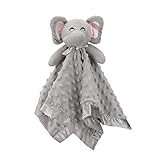
- [Soft Elephant Lovey] The elephant security blanket can help baby fall back to sleep quickly or feel safe regardless of where they are
- [Premium Material] The elephant stuffed animal is made of soft safe material which is certified by OEKO-TEX standard 100. More safe for baby. More friendly to the climate. No shedding or pilling
- [Best Baby Gifts] Time‑saving ready-made gift package featuring baby essentials and baby must haves—ideal for newborn, infant, baby and toddler
- [Cute Baby Toys] It is also a super adorable and soft plush baby toys. Amazingly lovely elephant appearance will attract babies and give a lot of fun to baby
- [Easy Clean and Perfect Size] Machine wash available on low, do not iron or bleach. Our baby snuggle toy includes a 16”x16” blanket and a cute elephant head which is perfect size for baby to cuddle or hold
Final Thoughts on Baby Loveys
A lovey can become a powerful source of comfort, security, and sleep support for many babies and toddlers. While not every child develops an attachment to a comfort object, many babies benefit from having a familiar item that helps them relax during naps, bedtime, travel, sleep regressions, and other big transitions. The key is introducing a lovey safely and gradually, while following safe sleep guidelines for your child’s age. Over time, a lovey can become a positive sleep association that helps your child feel calm, secure, and confident at sleep time.