Posts Tagged ‘baby schedule’

How Many Baby Naps : Sleep Quick Tip

Wednesday, February 3rd, 2010

In the beginning, your newborn sleeps most of the time and you don’t have to worry too much about naps. Your newborn’s sleep schedule and patterns are highly unpredictable, usually, so it’s hard to tell if she will have 5 naps or 8 on any given day. You’ve just given birth (or partnered the birth), so as long as she sorts out the difference between day and night, you probably won’t stress too much about it, unless she isn’t “sleeping like a baby.”

Once the fog lifts, you most likely want more predictability in your day and so you start focusing on getting your baby on a schedule and getting your baby to nap better, especially if your baby won’t nap. Just when you succeed, things change again and you wonder where you went wrong. It’s a good idea to know just when your baby will start to transition to fewer naps, so you know just how long you can enjoy good sleep before he changes on you again.

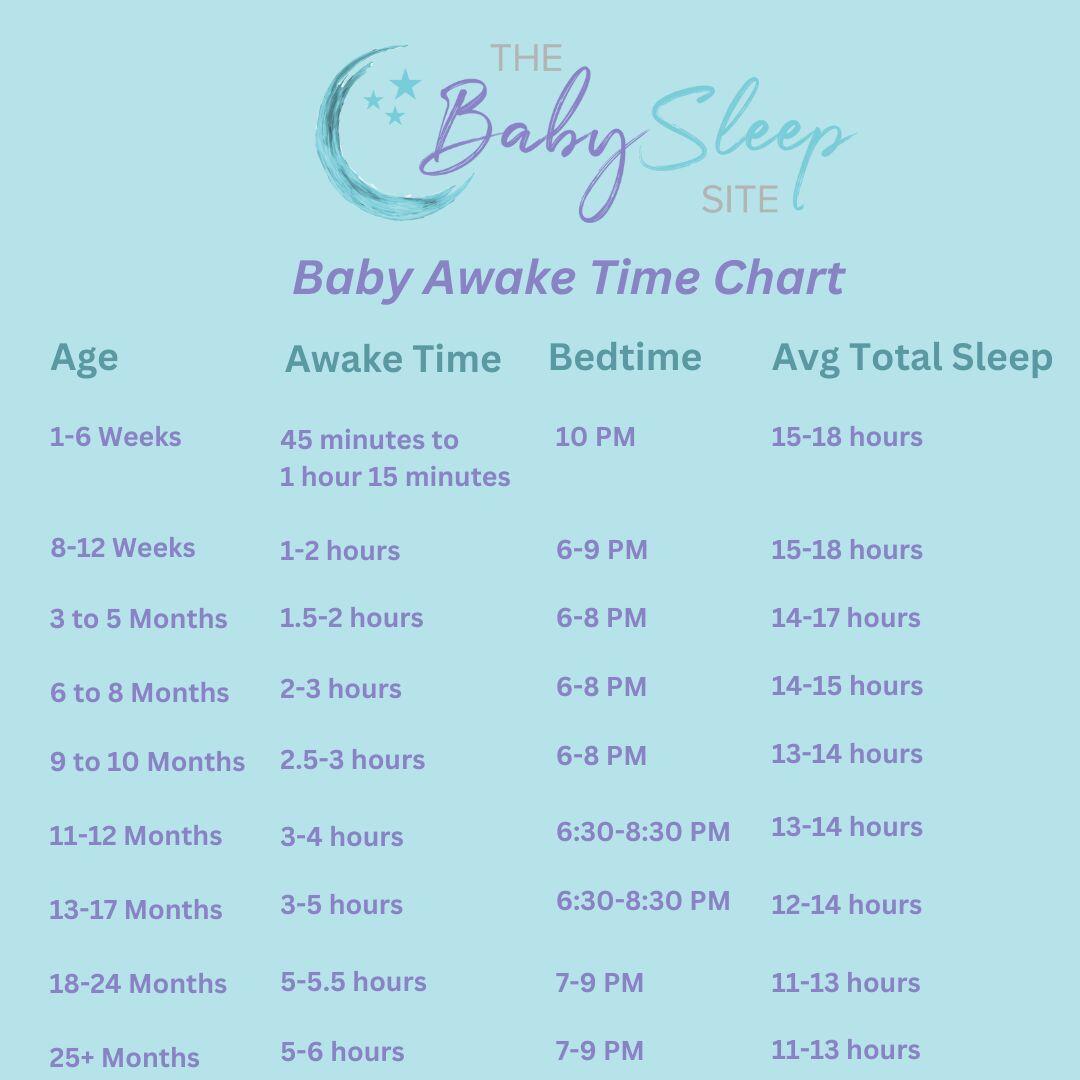
Here are your guidelines to the number of baby naps by age:

From 1-4 months, the number of naps your baby takes will be variable, but will hover around 4-5 naps per day, depending on how long his naps are and how long he can stay up between naps. By 3 or 4 months old, she will lean towards just 4 naps, rather than 5.

From 5-8 months, most babies will have three naps per day (though my son had four until after 7 months) . They will start to resist the fourth nap, no matter how tired they are. There are a few babies who will only have two naps at a very young age, but those naps are usually long.

From 9-15 or 18 months, on average, your baby will nap two times a day. Although many people believe most babies transition to one nap at 12 months, the average age is actually 15 to 18 months.

From 18 months to 4 years, toddlers will nap once a day. The age to transition away from all naps varies a lot, from 2 to 5+ years old.

You may want to view and bookmark our sample baby sleep and feeding schedules by age. And, if you’re looking for ways to get your baby or toddler into a healthy sleeping routine during the day, I encourage you to explore Mastering Naps and Schedules, a comprehensive guide to napping routines, nap transitions, and all the other important “how-tos” of good baby sleep. With over 40 sample sleep schedules and planning worksheets, Mastering Naps and Schedules is a hands-on tool ideal for any parenting style. Or, join our Members Area packed with exclusive content and resources: e-Books, assessments, detailed case studies, expert advice, discounts, peer support, and more! It actually costs less to join than buying products separately! For those looking for a more customized solution for your unique situation with support along the way, please consider one-on-one baby and toddler sleep consultations.

Happy napping!

Bookmark and Share
Category: Naps
Tags: , , , , , , , , ,

Owls and Larks

Tuesday, March 10th, 2009

Owls and LarksOwls are creatures of the night. They get energized at night and have great difficulty waking up early. Larks, on the other hand, love to go to bed early and wake up early, ready to go! You may have noticed your baby or toddler fall into one of these two categories or show a tendency of one over the other. Now that the time has changed, you might be hoping your lark wakes up later and will be disappointed when their schedule shifts back to where it was. If you have a night owl, you are cringing at getting baby to bed earlier now that the time has shifted forward.

Developmentally, many babies go through a period of waking very early in their first year. This does NOT mean they will always be this way (for some that is sadly not the case). And, for many babies, they get “trained” to wake up early (I’ve worked with parents whose baby wakes up as early as 4!!). Since light is what cues our brain to be awake and set our internal clock, one of the bigger mistakes you can make during the first year is allowing your baby to get up much before 5:30 or 6 a.m. and continue to do it for months on end. Do NOT start your day before 6 a.m., if you can help it.

With that said, you also have to have realistic expectations and be fair to your baby. You can’t put your baby to bed at 6 p.m. and expect her to necessarily wake up at 6 a.m. or later. 11-12 hours at night is normal for babies and toddlers under 2 (after 2 is variable), with a minimum of 10 hours, so it’s important to know your baby’s tendency for night sleep (to figure that out track your baby’s sleep for 2+ weeks) and set her schedule accordingly.

My eldest son (youngest son is still up in the air) is a NIGHT OWL! It is very challenging because the bedtime routine tends to shift later and later and later if we don’t set firm limits, but too late and it used to lead to night-wakings and now it just leads to a too-early wake-up and crankiness. He is so afraid he’s going to miss something and just doesn’t want the day to end…EVER. Add to that, when he was a baby, he was mostly an 11-hour baby (until he went to one nap), so we did have a 5 or 5:30 a.m. wake-time from around 6 to 8 or 9 months (before I shifted his schedule). For awhile he was waking up after 8 or 8:30 a.m., but now he has hovered around 6:30 or 7:00 a.m. where I expect it to stay until he becomes a teenager and I have to drag him out of bed. :)

Can you change a lark into an owl or vice versa?

No, not really. It’s biological. According to Ferber, they have even found a specific gene responsible! So, it’s not people’s imagination when they just aren’t “morning people” and “hate” those who bounce off the walls in the morning. However, some people’s tendency is stronger than others, so it IS possible to shift schedules at least a little bit for many babies who wake too early or go to bed too late after 9 or 10 months old. In fact, somehow I have changed into a night owl myself! I used to be a big time morning person, but I have built this entire website mostly at night (some very late ones I might add!) and I tend to have trouble getting up early these days. I blame the kids. :D

Is your baby or toddler a lark or an owl? What about you?

Bookmark and Share
Category: Schedules
Tags: , , , ,

Baby Temperament and Sleep Series: Regularity

Tuesday, March 3rd, 2009

Baby Temperament RegularityWelcome to Part 7 of my Baby Temperament and Sleep Series. If you are just joining us, you may want to start with Part 1, where I define baby temperament. This article will discuss regularity as a baby temperament trait. At the end of the series, I will give you a quiz to determine your child’s temperament.

Baby Temperament – Regularity

Your baby’s regularity is how predictable her schedule is from day to day. There are some babies whom you can set the clock by. They wake up at the same time every day. They eat at the same times every day. They take naps at the same time every day. And, yes, some even poop at the same time every single day. No doubt those kids are very easy to potty train.

Inconsistent children are very irregular. They wake up at different times every day. They get hungry at different times and nap at different times for different lengths every day. You can rack your brain and figure out what you did wrong today or right yesterday, but the truth of the matter is, this is just their temperament and nothing you do or don’t do will change it. Getting these children on a schedule can be very frustrating.

Part of my eldest son’s spirited-ness is his inconsistency and boy did it drive me crazy his first 10 or so months of life! I kept an Excel spreadsheet and tracked his sleep, looked for patterns and wondered what I did right or wrong every day. He gets hungry every day at a different time. Some days he’s hungry at 10 a.m. and I give him a little snack and that makes lunch at 1 p.m. or later. Some days if he has a snack, he’s starving at noon. It is so hard to know what will push everything too late or not and it’s hard! But, one of the best things I ever did was one day I finally accepted that the only thing consistent about him was the fact that every day would be different. And, that has been true every day since. But, accepting it relieved my stress about it.

Baby Sleep and Regularity

How might your baby’s regularity affect her sleep? Even though you have an inconsistent baby or toddler or preschooler, it doesn’t mean you don’t try to have a routine and a schedule. You might need to be a little more flexible, but children still thrive on routines and knowing what to expect next. You will want to come up with routines that are flexible for his temperament, but also don’t make you eat dinner late and have your baby go to sleep late. Establishing routines now will only help your child later when it comes to school and you don’t want your family life to be chaotic. Moving your irregular child to a schedule will likely take longer given his natural tendency is not to adhere to a predictable schedule.

The trickiest part for me is that my son is slow-to-adapt, yet inconsistent. So, he thrives on his routines and really needs them, but can’t let them change too much, even though he’s inconsistent (yeah I don’t understand that sentence that much either). For us, that means we have a routine “shell” and things vary in between. I do have to choose my battles wisely as some things are just not worth pressing against his persistence about routine changes.

With an irregular baby who may or may not be tired at “bedtime”, you may need to be a little flexible with the bedtime routine. Of course, with toddlers, they try a lot of things to stall bedtime, so it is tricky to know the difference between stalling and inconsistency. I am flexible within 15-ish minutes (at least I try to be) and then after that I put him to bed and tell him that I will come back to check on him if he isn’t asleep in 10 minutes. Most of the time he falls asleep within 5 minutes of me leaving.

When she is a baby, depending on the age, you may worry if you are doing cry it out whether she’s just not tired. Depending on the age, this can be true, and it’s important for you to know your baby and it helps to track their sleep for a couple of weeks before starting any formal sleep training. After 3 or 4 months old and up through before the age of 2, even the most inconsistent baby will be sleepy sometime between 6 & 8 p.m. After 2 years old, if she is still napping, it’s possible bedtime could get later until she drops the nap (or you drop it for her), but many will continue to go to bed before 8 p.m. In my experience, most babies cry more when they are over-tired than under-tired. If they are under-tired, you can usually tell during the bedtime routine.

If you are using a no-cry sleep training method, you still want to have routines and an early bedtime. You will want to be careful not to let bedtime get too late while you are waiting for your baby to appear sleepy. When a baby is over-tired, her body will release hormones to fight fatigue and they can appear hyper when they are really exhausted. It will just be important to set limits as it will be very easy to let things go too long.

I speak with a lot of frustrated parents with inconsistent children and it is frustrating, but keep in mind you might not do the same things every day at the same time, either. While it might be frustrating now, keep in mind, that we need these irregular children. They’re the ones who work the night shifts, the doctors who work 36 hours straight, and the pilots who fly the red eye (safely I might add). Our society needs all types of people and that’s why it’s really a good thing we have all these different temperaments.

Explore each of the 9 temperament traits, Intensity, Persistence, Sensitivity, Perceptiveness, Adaptability, Regularity, Energy, First Reaction, and Mood, focusing on how they play a role in your baby’s sleep and in the final part, take an assessment quiz to help figure out you and your baby or toddler’s temperament and see how it might be similar or different.

Can you set a clock by your child?

Bookmark and Share
Category: Temperament
Tags: , , , , ,

Baby Sleep, Daylight Savings and Time Changes

Thursday, October 9th, 2008

Here in the U.S. (in most states), we are going to be “falling back” (changing our clocks one hour back) this year on Sunday, November 2, 2008. In Europe, they will be changing their clocks the last Sunday in October, or October 27th. The reason we have Daylight Savings is that it allows us to use less energy in lighting our homes by having longer and later daylight hours. Whether you are changing the clocks or traveling with baby through time zones, most parents want to know what to do with their baby’s sleep when the clock says one time and baby says another.

For some, they are anxious for the time change to happen because their baby is going to bed too late, but other parents are freaking out because their baby or toddler is already waking too early and now the clock will say it’s even earlier!

What strategies can you use to handle the time change?

The first option is to do nothing. Your baby is waking at 7 a.m. and going to bed at 7 p.m. The day the clock changes, it will say 6 a.m., but it really is no different than the day before. You will stick to the same schedule and put him to bed when the clock says 7 p.m. that night, which, to him, will really be 8 p.m. For babies or toddlers who are not sensitive to being overtired or go with the flow, this is a fine strategy and within a day or two, he will be all set and re-settle into the same schedule. If your baby is an early bird (lark) who wakes up at 5 a.m., for example, he will fall back to the normal routine of waking at 5 a.m. after a few days to a week and if you are happy with that, I would simply suggest going with this option and planning to wake up at 4 a.m. for a few days.

The second option is to slowly change your baby or toddler’s schedule over the course of a few days before the time changes. On Wednesday, before your time changes, put your baby or toddler to bed 15 minutes later than normal in hopes that he wakes up 15 minutes later in the morning (I can’t promise that will happen because of our internal clocks, but it does work for many). Also, offer him naps 15 minutes later. Keep putting him to bed 15 minutes later each night until the night of the time change. By the time the clock changes, you would have shifted his schedule by 1 hour, the clock will change, and you will be back to your normal schedule. Unfortunately, this option can have a rippling bad effect on babies or toddlers who are sensitive to becoming overtired, possibly leading to crankiness, early morning wake-up, night-wakings and short naps.

The third option is to stick to the regular schedule leading up to the time change and once the time changes, be flexible and alter the schedule only as much as she can handle. The first night, you may only get to a 6:30 p.m. bedtime, for example, and she will go to bed earlier than normal (clock-wise). It’s the light that stimulates our eyes and sets our internal clock as to when we should sleep or not, so after a few days, she should re-settle into her normal schedule. Unfortunately, this option is really hard on those with babies or toddlers who are already waking up at 5 a.m. You may want to consider shifting your baby or toddler’s schedule in the 3 weeks leading up to the time change and, again, a week after the time change (if you do not like the 5 a.m. wake-up).

There are a variety of things you can do that fall somewhere in between any of these options, but these are the main options you have. If you’d like help with a custom solution for your unique baby, please contact me by purchasing my baby sleep consulting services. I’d love to help you!

How have you handled time changes in the past that has worked?

Bookmark and Share
Category: Schedules
Tags: , , , , , , ,

6 Month Old Baby Schedule

Thursday, July 31st, 2008

This article outlines the average 6 month old baby schedule, including feedings, solids, naps and night sleep.

Skip to the schedule


6 month old baby’s sleep

At this age, if you are not lucky enough to have a baby who sleeps through the night, many 6 month olds are still waking 1-2 times to eat at night. Anything more and likely you have a sleep association problem (aside from the 6-month growth spurt that should only last a few days to a week). Your 6 month old should be taking 2-3 naps per day for a total of 2-3 hours per day plus 11-12 hours at night. If you’re having trouble with naps, you might be interested in helping your baby nap.

Obviously, all babies vary, but here are some sample schedules you can use to make your own for your unique baby. Schedules are iffy at this age because many babies simply can not stay up past 2 hours to get to the next scheduled nap-time, so at this age, it’s likely naps are still on the short side, but come frequently. Over the next several weeks, you can work on getting down to just 3 naps to get closer to the 7 month schedule.

I should warn you that I am in the camp that breast milk or formula should be the primary nutrition for the first year and solids come secondary. Below are the amounts recommended from Super Baby Food, the book I use for reference (as a guide, not as the end-all-be-all because I don’t give my kids nuts before a year or follow other things in the book, but it’s a good reference guide). Another useful reference is Wholesome Baby Food. Although I work full time, I did make most of my baby food (I’d make 1 or 2 big batches of something each weekend in 1-2 hours), but even if you don’t, the website is useful as a guide when to introduce what food and other meal ideas.

Amounts per day:

• At least 5-6 breastfeeding sessions per day or 24-32 ounces formula or combination (decrease solids if your baby is not taking in at least this much)
• Water is unnecessary (breast milk and formula have plenty of water in them). If your baby has any constipation issues, focus on P-foods (pears, prunes, etc.)
• 1-2 servings baby cereal (1 serving = 1-2 Tablespoons dry)
• 1-2 servings fruit (1 serving = 1-2 Tablespoons)
• 1-2 servings vegetable (1 serving = 1-2 Tablespoons)

Note: If you did not start solids until 6 months (I did not start until 6 months), you will work your way up to the amount of servings above. Don’t worry about feeding this much right away!


Sample 6 month old schedule

Here is a what I call a “staggered” approach. My first son did better with a full feeding and then having solids a bit in between. He was a little hungry but not famished. He just didn’t do well with stopping nursing or his bottle mid-way to eat solids.

Schedule 1

6:30 – Wake and Breast milk or Formula
7:45 – Breakfast
8:30 – Morning Nap (at least 1 hour)
10:00 – Breast milk or Formula
11:30 – Nap (often 30-45 minutes at this age)
1:00 – Breast milk or Formula
2:00 – Nap (often 30-45 minutes at this age)
4:00 – Breast milk or Formula
4:30 – Catnap (30 minutes)
5:00 – Dinner
6:00 – Begin bedtime routine
6:30 – Breast milk or Formula and Bedtime
7:00 – Goal to be asleep

+Plus possibly 1-2 nighttime feedings

If your baby doesn’t mind a more “consolidated” approach to eating, like my second son, here is another type of schedule:

Schedule 2

7:00 – Wake and Breast milk or Formula, then Breakfast
9:00 – Morning Nap (at least 1 hour)
10:00 – Breast milk or Formula
12:00 – Nap (often 30-45 minutes at this age)
1:00 – Breast milk or Formula
2:30 – Nap (often 30-45 minutes at this age)
4:00 – Breast milk or Formula
5:00 – Catnap (30 minutes)
5:30 – Partial Breast milk or Formula Feeding, then Dinner
6:30 – Begin bedtime routine
7:00 – Bedtime
7:30 – Goal to be asleep

+Plus possibly 1-2 nighttime feedings

Note: Many people prefer to follow an eat-play-sleep routine, which is a good routine to follow, however, sometimes hard to implement at this age when the amount of time between naps is not long enough and your baby wakes too early from his nap because of a feeding. I take all of that into consideration when making my schedules. The most important part is to be careful not to create sleep associations with feedings too close to sleep times, which we saw become important at 4 months old.

You may also be interested in tracking your baby’s sleep, feedings, medication doses, immunizations, etc. using online baby software at Babble Soft. You can even use the software on your mobile device for when you’re on the go!

If you’re looking for ways to get your baby or toddler into a healthy sleeping routine during the day, I encourage you to explore Mastering Naps and Schedules, a comprehensive guide to napping routines, nap transitions, and all the other important “how-tos” of good baby sleep. With over 40 sample sleep schedules and planning worksheets, Mastering Naps and Schedules is a hands-on tool ideal for any parenting style. For those persistent nighttime struggles, check out Help Your Child Sleep, a Step-by-Step Guide. Using the same unique approach and practical tools for success, this e-book helps you and your baby sleep through the night. Or, join our Members Area packed with exclusive content and resources: e-Books, assessments, detailed case studies, expert advice, peer support, and more. It actually costs less to join than buying products separately! For those looking for a more customized solution for your unique situation with support along the way, please consider one-on-one baby and toddler sleep consultations.

What is your 6-month old’s schedule?

Bookmark and Share
Category: Schedules
Tags: , , , , , , , , , , , , , , ,

When Can I Put My Baby on a Schedule?

Tuesday, July 29th, 2008

Many people wonder when they can put their baby on a schedule. Today’s sleep quick tip is that babies will vary, but the average age that I recommend to start trying a sleep schedule is around 6 months old. Depending on how consistent they are, how sensitive they are to becoming overtired and how over-tiredness affects their napping will drive when a schedule is comfortably achievable. Of course, many people try schedules sooner and some will succeed, but if pushing them to be awake too long makes them nap worse, you aren’t helping you or him get enough sleep. The main obstacle in short-napping in babies under 9-10 months old is over-tiredness. When they are over-tired, they have more trouble settling down to sleep. This is usually done by keeping them up too long between naps. Strange, but true!

Would you like to learn more about baby schedules?

If you’re looking for ways to get your baby or toddler into a healthy sleeping routine during the day, I encourage you to explore Mastering Naps and Schedules, a comprehensive guide to napping routines, nap transitions, and all the other important “how-tos” of good baby sleep. With over 40 sample sleep schedules and planning worksheets, Mastering Naps and Schedules is a hands-on tool ideal for any parenting style. For those persistent nighttime struggles, check out Help Your Child Sleep, a Step-by-Step Guide. Using the same unique approach and practical tools for success, this e-book helps you and your baby sleep through the night. For those looking for a more customized solution for your unique situation with support along the way, please consider one-on-one baby and toddler sleep consultations.

When did you put your baby on a schedule?

Bookmark and Share
Category: Schedules, Sleep Quick Tips
Tags: , , , , , , , , , , , , , , ,