

Newborn babies should be fed on demand when they are hungry and will generally let you know when they have had enough formula. However, you probably have questions about how much milk to give your baby. Today, we will answer how many ounces of formula should a newborn drink in a bottle. Use this handy newborn drink chart to help make sure your baby grows happy and healthy.
How Many Ounces of Milk Should Newborns Drink Based on Body Weight
Your newborn should eat around 2.5 ounces (oz) of formula every day for every pound of body weight. If you are breastfeeding, be sure to check our other baby feeding chart.
For example, a 10-pound baby will eat approximately 25 ounces, in total, every 24-hour period.
Most babies 8 weeks and older will not eat more than 32 oz per day though I’ve seen a few exceptions in my 15 years as a baby sleep consultant. Keep in mind that the total may vary slightly day-to-day, but if you have any concerns about a significant drop or increase in intake, be sure to discuss it with your healthcare provider as it may indicate a health issue.
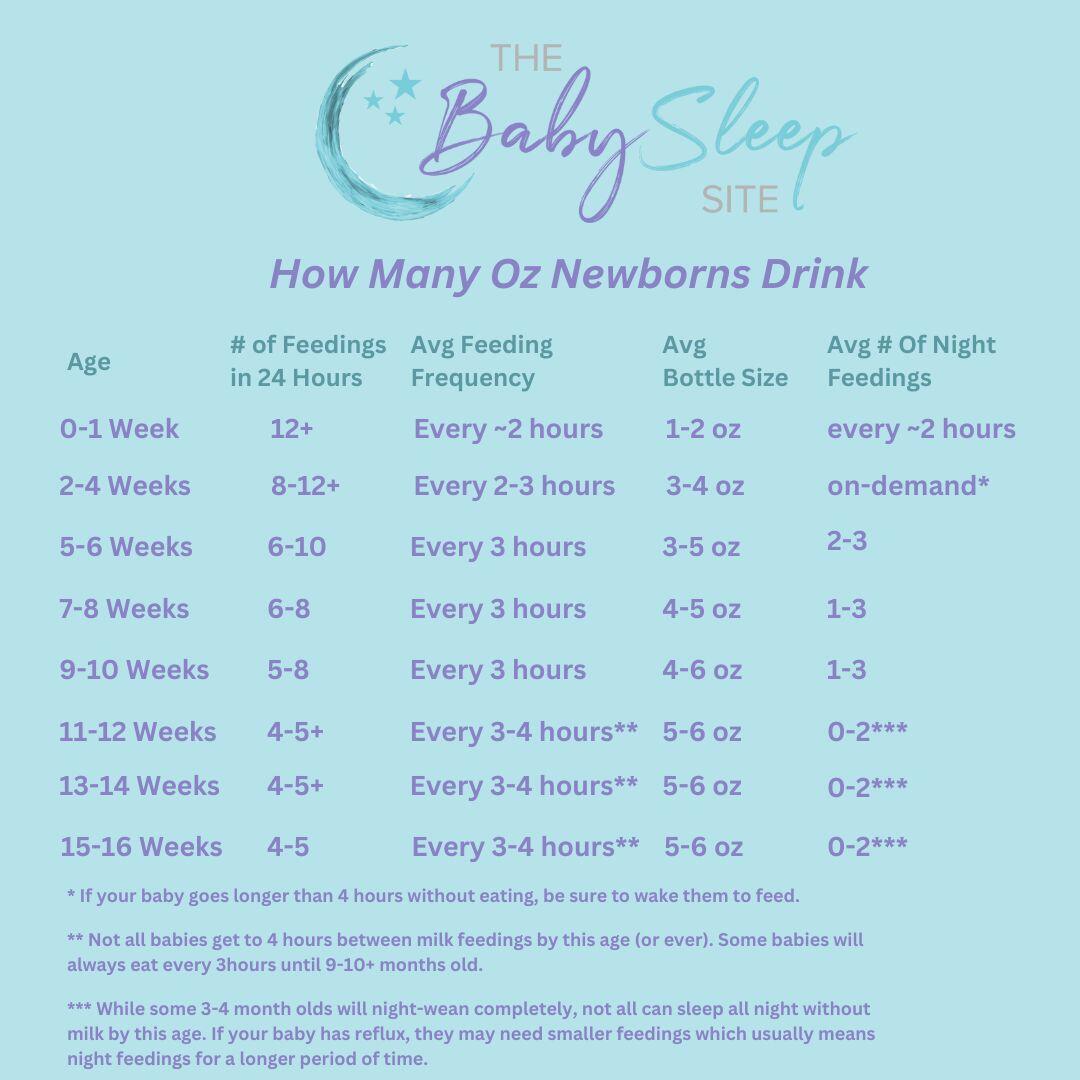
Newborn Drink Chart in Ounces
While we can put estimates in the below newborn drink chart, always follow your baby’s cues and use your intuition. The best way to know if your baby is eating enough is to follow their growth curve and make sure they are gaining weight appropriately. Please make sure you ask your baby’s healthcare provider if you have any concerns. But, to give you an idea, here is a newborn drink chart in oz for you to use as a guide:
| Age | # of feedings in 24 hours | Avg Feeding Frequency | Avg Bottle Size | Avg # of Night Feedings |
|---|---|---|---|---|
| 0-1 week | 12+ | every ~2 hours | 1-2 oz | every ~2 hours |
| 2-4 weeks | 8-12+ | every 2-3 hours | 3-4 oz | on-demand* |
| 5-6 weeks | 6-10 | every 3 hours | 3-5 oz | 2-3 |
| 7-8 weeks | 6-8 | every 3 hours | 4-5 oz | 1-3 |
| 9-10 weeks | 5-8 | every 3 hours | 4-6 oz | 1-3 |
| 11-12 weeks | 4-5+ | every 3-4 hours** | 5-6 oz | 0-2*** |
| 13-14 weeks | 4-5+ | every 3-4 hours** | 5-6 oz | 0-1*** |
| 15-16 weeks | 4-5 | every 3-4 hours** | 5-7 oz | 0-1*** |
* If your baby goes longer than 4 hours without eating, be sure to wake them to feed them.
** Not all babies get to 4 hours between milk feedings by this age or ever. Some babies will always eat every 3 hours until 9-10+ months old.
*** While some 3-4-month-olds will night-wean completely, not all can sleep all night without milk. In addition, some formula-fed babies still eat at night even past 6 months old, especially if they have reflux.
How Many Oz Should a Newborn Drink? – Chart to Download, Print, or Pin
Simply click on the image below to download or print this newborn drink chart:
Other Articles About Feeding Your Baby…
Should You Feed Newborns On Demand or On a Schedule?
Newborns should be fed on-demand and always remember that crying is usually the last cue they give you! Look for other signs of hunger such as rooting, sucking on their hands profusely, smacking their lips, or becoming irritable. You will get to know your baby, and as they get older, they will likely gravitate to predictable times and a baby feeding schedule. Until then, follow the newborn drink chart because helping your baby eat better during the day will help them sleep better at night!
When Can Newborns Go All Night Without Feeding?
How many hours your baby can sleep without feeding varies by age and weight. In addition, how many ml your newborn drinks at a time will be a big factor. As illustrated in the above chart, most newborns will sleep through the night without feeding when they are eating at least 6-ounce bottles every 3-4 hours during the day. Once a baby is capable of consuming 30-32 oz during daytime hours, they will typically no longer need to eat at night. Always remember that every baby is unique, though!
Related posts:
 How Many ml Should a Newborn Drink? Chart for Formula-Feeding Babies
 Baby Feeding Chart – How Many Ounces By Age
 6 Month Old Baby Feeding and Sleep Schedules: Samples for Breastfeeding and Formula-Feeding Babies
 8 Month Old Baby Feeding and Sleep Schedule: With Milk, Solid Food, Naps, and Nighttime Sleep – For Breastfeeding and Formula-Feeding Babies