Archive for the ‘Newborns’ Category

Swaddling How-To And When to Stop

Thursday, May 20th, 2010

Swaddling your newborn to sleep can be very beneficial. Many people wonder if they can ever swaddle their baby like the nurses did at the hospital. I admit, my husband was better at making our little burrito than I was until we bought The Miracle Blanket. This article is your swaddling how-to, including deciding when to stop swaddling and how to stop swaddling.

Why Swaddle Your Baby?

The reason why you swaddle your baby is to make her feel like she did when she was in her mommy’s tummy. She didn’t have room to stretch out and, for months, found comfort in being tightly “held” in your belly and the movement, when you walked, lulled her to sleep. Harvey Karp in The Happiest Baby on the Block suggests that babies actually need more time in the womb (a fourth trimester), but if they had that time, they’d never get through the birth canal because their head would get too big, so swaddling extends the womb feeling for them. When they are first adjusting to this big, cold world (compared to your belly), swaddling helps a lot to keep them calm and relaxed (especially when they haven’t outgrown the moro / startle reflex where their limbs “jump” uncontrollably).

What if Your Newborn Doesn’t Like Being Swaddled?

Sometimes it appears your baby doesn’t like to be swaddled. This could be true, but sometimes, they are just so overtired and wound up that they resist the swaddle only because they are agitated and fatigued. It does not necessarily mean he doesn’t like it. After you swaddle your newborn, try swaying him and soothing him to see if he will calm down. My son loved to be swaddled, but at first he’d still cry once he was swaddled. Contrary to the video you’ll see down below, he did not calm down instantly once he was swaddled (just his personality). But, he did sleep better and longer once he did fall asleep and he was swaddled. If your baby just never calms down or if swaddling used to work and now it doesn’t, it might be time to stop swaddling. More on that later.

How to Swaddle Your Baby

It is pretty difficult to describe, in words, how to swaddle your baby. Some people call it wrapping up a burrito and if you’ve ever made a burrito, it is a little similar. You want to fold the bottom of the blanket over her legs and then wrap up the sides, so the “contents” don’t fall out. :) Better yet, let’s just watch a couple of videos on how to swaddle your baby:

Miracle Blanket Video

How to swaddle your baby video #2 -

When to Stop Swaddling

From my research, it does not harm your baby to swaddle them for months and months unless they are not getting free play time during the day. They need to be able to move their limbs to grow big and strong, so you don’t want them swaddled all day and night. But, swaddling while your baby sleeps until 6, 7, 8, and even 9 months is not unheard of and if your baby likes it and hasn’t learned to break free, this should be fine (check with your pediatrician for any doubts you might have about your own baby). Once your baby starts breaking out of the swaddle very often and especially when it becomes a hazard where she might suffocate with the blanket, it’s time to stop swaddling. The average age seems to be around 5-6 months. Again, all babies are different. We stopped swaddling sometime around 4 months with both boys, when we taught them to self-soothe.

How to Stop Swaddling

The most common method to transition away from swaddling is to swaddle with legs out, then one arm out, then to stop swaddling all together. Some swaddle one arm out, then both arms out and then stop swaddling. A baby who was once sleeping through the night may not do that while adjusting to sleeping without the swaddle. Keep in mind that it might take a week or two for her to get used to not being swaddled and getting used to having her limbs out. If her moro or startle reflex hasn’t stopped, it might be especially difficult and you might swaddle her again and try again a few weeks to a month later. Babies change very fast in the first year that something that didn’t work at one time might work great just two weeks later. You must be patient and give your baby time to adjust.

Can you sleep train while baby is swaddled?

A common question is whether you should sleep train while your baby is swaddled. It never hurts to try to let your baby fall asleep unassisted, even while swaddled. Some babies simply will fall asleep within a few minutes when they are put down awake. Other babies (like mine) will not. So, in general, I do NOT recommend sleep training while your baby is swaddled, especially if you are using a variation of cry it out. Your baby needs to find a way to self-soothe whether it’s sucking on her fingers, thumb, or holding on to her sleep sack. But, if you put down your baby and he fusses or cries for 5 minutes or less and he’s swaddled, it appears you have a very good self-soother and you can continue swaddling and when he’s ready, you can probably stop swaddling fairly easily.

What if stopping the swaddle is not easy?

You’re in luck! This whole site is dedicated to when things don’t come easy when it comes to your baby’s sleep! Make sure you get your FREE guide and helping your baby sleep through the night, check out our forum, or consider our baby sleep consulting services, where you can get a custom sleep plan for your family that you can feel good about.

How long did YOU swaddle your baby and how did you stop swaddling?

Bookmark and Share
Category: Newborns
Tags: , , , , , , , , , , , , , , ,

10 Tips to Help Your Newborn Baby Sleep

Thursday, June 19th, 2008


When you bring your baby home no one tells you that “sleep like a baby” only lasts a short time. This article will give you 10 tips to help your newborn sleep better.

Disclaimer: Before I get to the 10 tips to help your newborn sleep, I thought I should note that it can be dangerous for a new newborn baby (just a few weeks old) to sleep all night. They really do need to eat at least every 3 hours in those early days so they can grow well and thrive.

It is also safest to place baby on his back to sleep, to guard against SIDS. You may be interested in other ways to lower SIDS risks.

There, now that I got that out of the way.

Newborn Baby Sleep

1. Short Wake-time

The first week or so, your newborn baby will most likely hardly be awake, but after the first week or two, the #1 key with your newborn is to keep wake times very short, at first. You should soothe your baby for sleep after just 1-2 hours of wake time TOPS. You should look for signs that she is getting sleepy and start soothing her. If you wait until she is fussy, cranky or crying, you are actually too late!

An overtired baby will have more trouble settling down and going to sleep and staying asleep. My boys always fell asleep easiest when I caught them before they started to fuss and cry. Some babies are much more sensitive to being overtired than others, so while others will barely notice their child get sleepy before she drifts off to sleep, others will begin to realize just how in tune with their baby they need to be!

By wake time, I mean to include feedings and diaper changes and disregard how long her last nap was. For example, little Suzie starts to nap at 8am and sleeps for 3 hours. She eats at 11am and you change her diaper. Now, it’s 11:30 and you decide to give her a bath. At 11:45, she is fussy. She is already overtired and she needs a nap! In the beginning, they can’t go long before getting tired and overstimulated.

2. Swaddle

To help mimic the feeling of the womb, it helps to swaddle your newborn baby. This basically means to wrap him up in a blanket like a little burrito. You may have seen them do it at the hospital. This helps him feel safe and secure and also helps him stay asleep during any moro reflex or startle reflex moments. It is said that those reflexes are similar to how we have the feeling we are falling while falling asleep. It can take up to 4 or 5 months for your baby to stop the startling.

I recommend The Miracle Blanket for swaddling. It is a little pricey, but so easy to use and so hard for your baby to break out of! So worth it, to me! If you can’t or don’t want to spend that much, try this SwaddleMe Wrap

3. Days bright / Nights dark

Although you might be tempted to keep things quiet and darker for your newborn to nap well, it might prolong the day/night confusion that almost all newborns will have. Day/Night confusion can last up to 6 weeks. When she was in mom’s belly, mom’s movements lulled her to sleep and when mom was resting, she’d have a party. When she comes out, she doesn’t know she should act in the complete opposite fashion.

So, keep days bright and upbeat and nights, dark and boring, and it will help your newborn sort out her days and nights faster. This might be more than you want to know, but light is what cues our eyes to tell us to stay awake or whether it’s time to sleep.

4. Limit naps

If he is taking longer to sort out days and nights (or you are having a very rough time keeping up with him being up all night), you can further speed up the process by limiting naps to no longer than 3 hours during the day.

5. Post-feeding routine

To help your newborn baby sort out day and night sleeping even more, you may want to develop a play routine after she eats during the day. Keep her awake 30 minutes after feeding by playing, singing, bathing, etc. Again, the light stimulating her eyes will help her sort out that daylight is for being awake at least a little bit. Many people recommend the eat-play-sleep routine for newborns. This is the primary message of the popular book, On Becoming Baby Wise. You might want to review my explanation as to why I do not recommend this book, though.

6. Co-sleeping

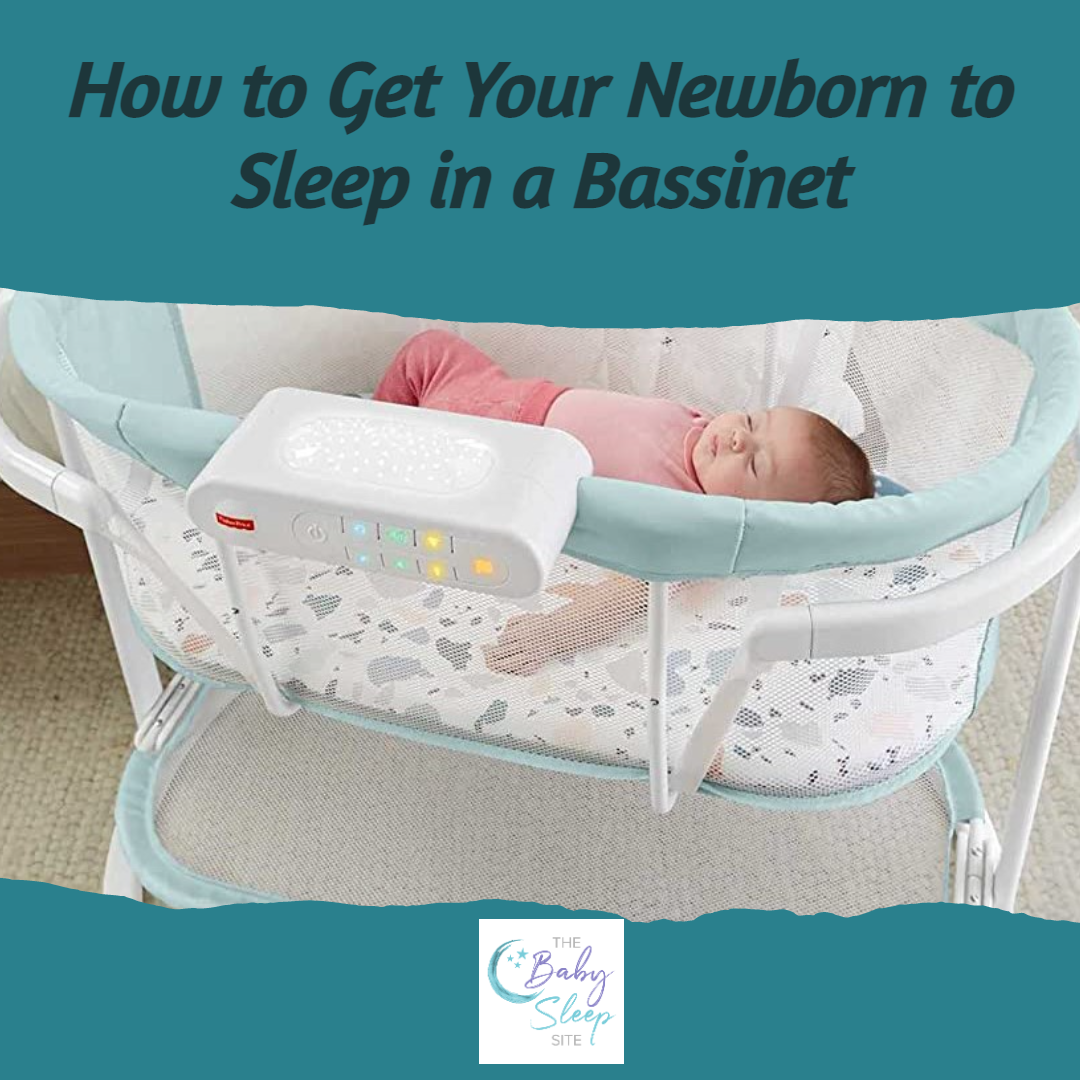
Sometimes it helps to have your newborn in the room with you for quick access for middle-of-the-night feedings and diaper changes. This also can help give him more comfort being close by as he will be able to hear and smell you. For safety reasons, you should use a Co-Sleeper , sleep positioner, or bassinette, rather than have baby in bed with you. I used the second one with my second son and then I moved it into his crib for a seamless transition to his crib. We were able to remove it a few weeks later.

7. Angle the mattress

For babies who spit up a lot or have reflux, it helps to angle the mattress when he sleeps, so baby is not flat on his back. You’ll want to angle the mattress so his feet are lower than his head, so his stomach contents can stay put. To angle the mattress, you can simply change the support platform level on one side on most cribs. If that is not feasible, you can put blankets and pillow under the mattress. Please note that the mattress should still remain flat at all times, just at an incline. You must make sure that you do not tilt the mattress so much that your baby slides down the bed, either. I strongly recommend that you first check with a knowledgeable health care provider to make sure that what you do is best and safest for your child. I only wanted to highlight the idea.

8. White Noise

White noise is made up of the sounds like a fan whirring, vacuum cleaner, hair-dryer, etc. It helps a newborn sleep because inside mom’s womb was all white noise. The sound of her blood flow, heart beating, etc. That’s why he finds comfort when you may run the vacuum cleaner. My son used to love when I turned on the blow-dryer. Of course, you can’t run the vacuum all day, so I recommend getting a White Noise machine, sound machine or a White Noise CD. I have two of the second one in each boy’s room so they don’t wake each other and they work like a dream!

9. Wear baby

For particularly fussy babies or just for parent’s convenience and snuggling, it helps to “wear” baby using a sling. They get very folded up in a sling, but again, it mimics the womb and babies love it! I didn’t use a sling with my first, but used a BabyBjorn Baby Carrier and loved it! It really helped me walk off the baby weight, which was a bonus. But, with my second, I did use this sling (there are many others!) and my son would fall asleep in less than 5 minutes until he grew out of it. This helped tremendously when I needed to cook dinner and do stuff with my toddler, at the time. I have also heard good things about the Moby Wrap and the Maya Wrap.

Here are ten reasons to wear your baby.

10. Swing

As I said earlier, mom’s movements lulled baby to sleep while in the womb, so I also recommend trying a swing, but don’t be surprised if your newborn only likes it at high speeds. Our family teased us we were making our first son “drunk”, but he just loved it going FAST and it was the only way he’d fall asleep in it! We used something like this swingto help him sleep (I don’t see the exact one I used anymore — guess I’m officially old now). My friend has the Fisher-Price Ocean Wonders Aquarium Cradle Swing and loves it. They didn’t have that when I was shopping for one!

Important Note: Some say it might not be safe for a newborn to sleep in a car seat, so be cautious about that. Some say it’s just fine.

Unfortunately, some of these tips do create sleep associations, but during the first weeks, you really do what you can to survive. Obviously, it never hurts to try to put your baby down to sleep without any of these “tricks”, but as I’ve probably said a billion times already on this site, it just doesn’t work for all of us.

For more product and site recommendations, please view my baby sleep resources page.

For additional information on helping your child sleep, you may be interested in our free guide, 5 Ways to Help Your Baby Sleep Through the Night or our e-Book, Help Your Baby Sleep, a Detailed Guide.

Do you have any newborn baby sleep tips?

Bookmark and Share
Category: Newborns
Tags: , , , , , , , , , , , , , , , , , , , , , , , ,

Newborn Sleep Schedule and Patterns

Tuesday, June 17th, 2008

Many new parents want to know when their newborn will sleep on a schedule or what the baby’s sleep pattern will be. This post will outline the average newborn’s schedule and sleep patterns.

Newborn Day / Night Confusion

When your son or daughter was in mom’s womb, mom’s movements lulled baby to sleep and when mom rested, you may have noticed he or she perked up. Once she is born, she does not automatically know she is supposed to do precisely the opposite! It takes a few days to several weeks for this to be sorted out, but it will get sorted out. Of course, this is tiring for us, parents!

Newborn Sleep Patterns

When your baby is first born, he will sleep more than be awake. They sleep about 16 hours per day and wake time includes any feedings. As the weeks go by, they will be able to stay up longer, but still sleep 14-16 hours in a 24-hour period by one month of age. By 3 months old, the average amount of sleep in 24 hours is still 14 hours.

A newborn will also cry 1-2 hours per day (in total, not all at once, usually). This is normal. It is the only way she can communicate to tell us whether they are hungry, tired, uncomfortable, wet, etc. Unfortunately, some babies will develop colic (bouts of intense crying that’s difficult to soothe and the causes unknown) when they are just a few weeks old. The crying might last hours per day and colic usually ends around the 3 or 4 month mark, hopefully not longer.

Newborn Sleep Schedules

Depending on your baby’s sensitivity level to being overtired, a schedule may not form until after he is 6 months old or longer. My first son, who is the primary reason this site even exists, did not get “good” at a schedule until 7 1/2 months because he just could NOT stay up long enough without becoming so cranky.

Many parents desire a schedule much sooner, but if your baby is sensitive to overtiredness, you will only sabotage your own efforts because he will get overtired and fight sleep more, not less. This is one of the most misunderstood facts of a baby’s sleep needs, in my experience. Many people might tell you to keep your baby up such that he will sleep more at night and other advice like that (I heard a lot of it when my son was such a challenging sleeper!). Unfortunately, this will only lead to more and more sleep deprivation that will make him fight sleep more and thus lose more and more sleep until he’s one big overtired cranky mess. If that is what has brought you to this site today, try to keep wake times short and become in tune with when baby needs to sleep just as much as you are in tune with when he needs to eat and some of your problems may be resolved as simply as that.

Consistency

For some babies, they may be consistent from the very beginning while others remain inconsistent the rest of their lives. Depending on your personality, this can be very frustrating. If you get frustrated by your baby’s inconsistency, take a look within and ask yourself these questions:

  • Do I go to bed at the same exact time every night?
  • Do I wake up at the same time every morning?
  • Do I wake up to go to the bathroom at night at the same time?
  • Do I get hungry and eat meals at the same exact time every day?

If you answered no to any of those questions, you are likely realizing that your baby isn’t much different than maybe you are! If you answered yes to all of them and your baby does not follow suit, ask your partner or make sure you brought the right baby home. Kidding! I have no scientific basis for thinking this is a hereditary, just a hunch.

My first son was and still is highly inconsistent. Although I am too, it’s still hard to parent sometimes, especially given my “planning” personality. I used to log and track and track and log looking for patterns and all I found was that he had none. It took a long time, but I finally had to let it go and realize the only thing consistent about him would be that each day would be different. :) And, it was. Looking at myself and my own patterns helped me take the pressure off him to be the same every day. Regardless if your baby is consistent or not, the same sleep patterns generally emerge from all newborns. It still helped me a lot to track his sleep because it helped me know how many hours per day he’d typically sleep and I did start to see a pattern of when he’d wake in relation to dinner, not bedtime.

For more help on your newborn’s sleep, please see my post outlining 10 tips to help your newborn sleep.

Bookmark and Share
Category: Newborns
Tags: , , , , , , , , , , , ,