How Crying Can Lead to Babies Sleeping
Tuesday, July 20th, 2010
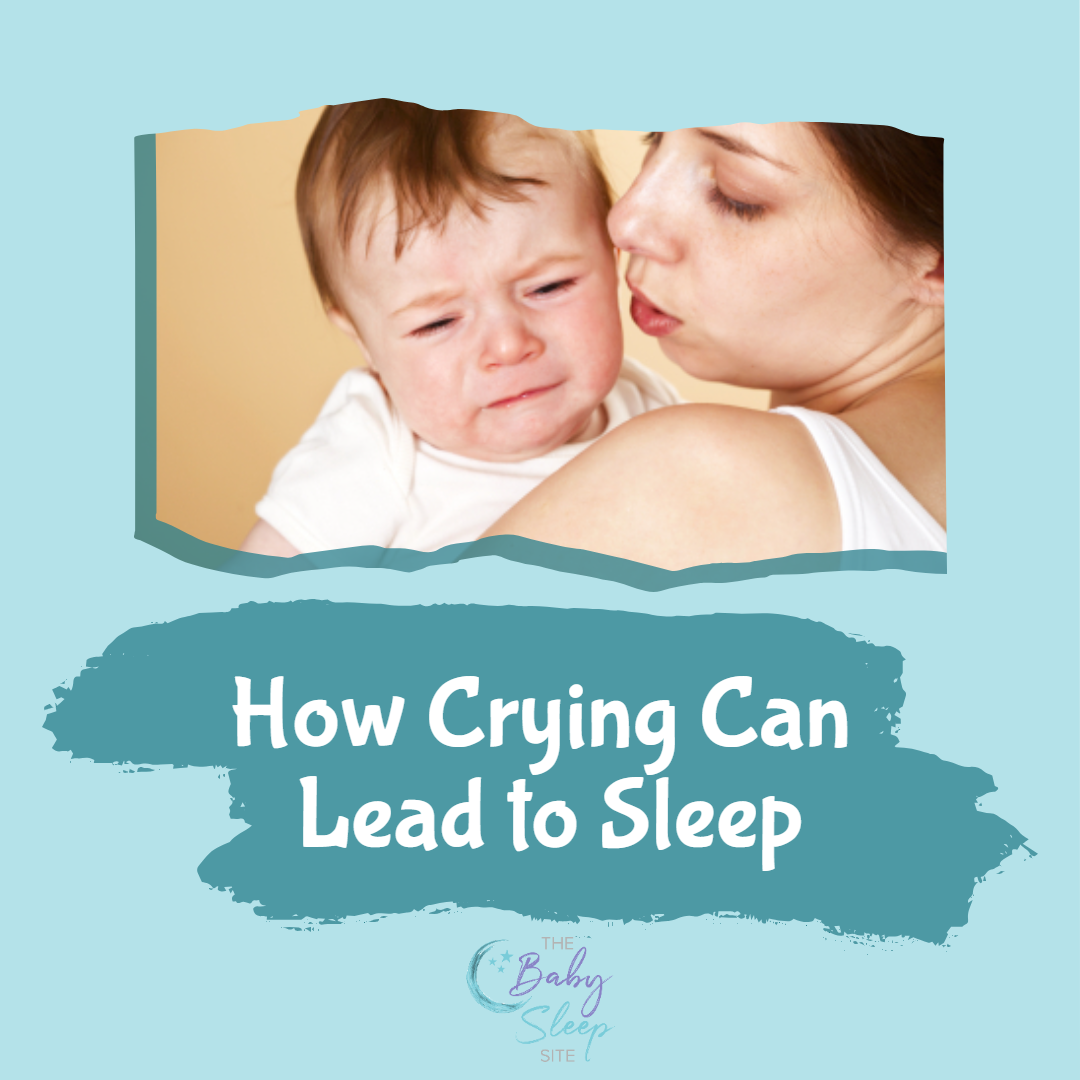
A lot of times parents don’t understand how crying can ever lead to their baby sleeping. They think that they will certainly exhaust themselves and fall asleep that way, eventually, but what are they really learning? This article is very much NOT about cry it out. There is a LOT in between helping your baby back to sleep every two hours at night and letting them cry it out. This article is discussing how crying can lead to sleep and why crying might be a necessary step in your baby learning how to sleep, even if you are right next to your baby.
Imagine, you are learning to ride a bike. Your parents have put training wheels on your bike to stop you from falling. But, now it’s time for you to learn how to ride your bike on your own. Your parents tell you it’s time to take the training wheels off, but they’re still holding your shoulders as you pedal down the street. All of a sudden they ask you “Are you ready for me to let go?” and you say “I think so.” and they let go and you are off riding your bike all on your own. You look back and seeing your parent has let go of the bike, you freak out, and you fall down, scraping your knee.
It scared you to think that your parent was no longer holding on to you as you rode your bike. You fell down because you lost your focus and confidence. You are scared and you never want them to let go again. Maybe you’ll just never know how to ride a bike by yourself.
At this point, your parent has three choices: a) Put the training wheels back on, b) Keep holding on to your bike while you ride up and down the street, or c) Let go again and hope this time you learn to ride on your own. Having the age and wisdom, your parents know that you CAN ride a bike and all you need is practice and confidence. If they choose the third option, they can find a gentler way to teach you how to ride a bike. But, one thing remains the same: It is very difficult to learn to ride a bike without some falling and we parents want to cushion your fall as much as possible.
When it comes to helping your baby sleep, you might use “training wheels” in the form of a pacifier or rocking your baby to sleep or feeding your baby to sleep or some other sleep crutch, but one day you will realize that it’s your fault your baby won’t sleep and it’s time to take the training wheels off. You have decided that what your baby once NEEDED to sleep, now it’s simply a crutch, hindering him from actually learning how to sleep well on his own.
There are endless sleep training or coaching strategies (are you sleep training a tortoise or a hare?), but one thing that remains the same with all of them: it is difficult to convince your baby that she can sleep on her own without some crying just like it’s difficult to learn to ride a bike without falling. Does that mean you send your child outside to ride a bike on her own or let her cry it out all alone in her crib in her room? Not necessarily. Some people abruptly “let go” of the bike without telling their child “ripping off the band-aid” and others hold on for years and know that, eventually, she will learn to ride a bike. Everybody parents differently and you should have confidence in that your way is the right way for YOUR family.
Did you know there are many children and adults who don’t know how to ride a bike? Did you know that some adult sleep problems have been linked back to childhood? Did you know that sleep problems in children are now being linked to young adult drug and alcohol problems? I only just learned that because the study just came out this year. Here is a significant finding of that study:
“We found that ‘having trouble sleeping’ in early childhood, ages three to five, predicted a higher probability of ‘having trouble sleeping’ in adolescence, ages 11 to 17, which in turn predicted the presence of drug-related problems in young adulthood ages 18 to 21,” said Wong. “Overtiredness in early childhood predicted lower response inhibition — that is, having problems inhibiting impulses and behavior — in adolescence, which predicted higher numbers of illicit drugs used. Overtiredness in childhood also directly predicted the presence of binge drinking, blackouts, driving after drinking alcohol, and the number of lifetime alcohol problems in young adulthood.”
Now, I know that the parents who read this site won’t necessarily have children in this high-risk group because I know that you are working on your sleep issues. This article is mostly to encourage you to work on it sooner rather than later and to resist the temptation to avoid all tears at all costs.
Crying is part of the way babies communicate. She may have trouble finding that confidence that she CAN do this without you getting out of her way a little bit and “letting go”. Stay with her to encourage and support her through the transition, if you wish, but don’t keep “holding on” to avoid her disappointment and crying. We all need to fall down sometimes to learn how to get back up and it’s part of growing up. Only you can decide the “right” time for her to learn to sleep on her own. I promise you that most of the time the first few nights are the worst and things can get ten times better after that.
If you need help developing a personalized sleep plan for your unique situation, when you are ready, make sure you check out our baby sleep consulting services, where we work with you on a plan YOU can feel good about.
What is your view on crying and baby’s sleep?
Tags: baby crying at night, baby crying sleep, baby fighting sleep, baby sleep, cry in sleep, cry it out sleep, crying in sleep, crying sleep, crying stop, crying to sleep, sleep training babies