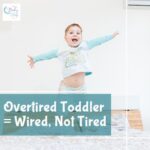

When your toddler won’t sleep well, it’s easy to wonder: Are they overtired… or not tired enough? The tricky part is that both situations can lead to similar challenges (bedtime resistance, short naps, and night waking), but the reason behind the behavior is very different. Understanding whether your toddler is overtired or undertired can help you adjust their schedule more effectively and reduce sleep struggles.
Overtiredness can look different depending on age. For example, overtiredness in babies often shows more physical cues, while toddlers tend to show behavioral changes. See how overtiredness presents in babies in our guide to overtired babies.
What’s the Difference Between an Overtired and Undertired Toddler?
An overtired toddler has been awake too long and has passed their optimal sleep window. This often leads to a “wired but tired” state, where stress hormones make it harder for your toddler to settle.
An undertired toddler, on the other hand, hasn’t been awake long enough to build sufficient sleep pressure. They may seem alert, playful, and simply not ready for sleep yet.
Signs Your Toddler May Be Overtired
- Hyperactivity at bedtime (“second wind”)
- Meltdowns or emotional outbursts
- Resistance to sleep despite obvious fatigue
- Difficulty settling once in bed
- Early morning wakings or fragmented sleep
Overtired toddlers often appear wired, fussy, or overwhelmed rather than calm. If you determine your toddler is overtired, the next step is learning how to address it. Learn more about overtired toddler signs and solutions in this article.
Signs Your Toddler May Be Undertired
- Calm resistance at bedtime without distress
- Takes a long time to fall asleep but stays content
- Plays quietly in bed or stalls without upset
- Wakes up happy and alert
- Bedtime feels more like “not ready” than “fighting sleep”
Undertired toddlers are usually engaged, playful, and not showing stress signals.
Quick Comparison: Overtired vs Undertired Toddler
| Overtired | Undertired |
|---|---|
| Wired, hyper, or emotional | Calm, alert, and playful |
| Bedtime distress/meltdowns | Bedtime stalling without distress |
| Difficulty calming down | Difficulty falling asleep due to lack of sleep pressure |
| Night wakings | May fall asleep eventually, but later than expected |
Why It’s Easy to Confuse the Two
Toddlers don’t always show clear sleepy cues. Instead, behavior becomes the main indicator. And those behaviors can overlap.
For example:
- A toddler who resists bedtime could be overtired or undertired
- A toddler who won’t fall asleep quickly could be overtired or simply not ready
That’s why observing how they resist sleep matters more than the resistance itself.
Sleep resistance is common across ages and can sometimes feel like your child is simply fighting sleep. Learn more about why this happens in our article on why babies fight sleep.
How to Narrow It Down
To figure out which one you’re dealing with, consider:
Wake Time
- If your toddler has been awake longer than usual: overtired may be more likely
- If wake time is short: undertired is more likely
Wake time plays an important role in both overtiredness and undertiredness. Understanding age-appropriate wake windows can help you better predict when your toddler is ready for sleep.
Behavior During Bedtime
- Emotional, escalated, or meltdown-type behavior: overtired
- Calm, engaged, or playful behavior: undertired
Sleep Environment
- A strong routine can help reveal patterns more clearly over time
- What This Means for Your Toddler’s Schedule
- If overtired: your toddler may need earlier sleep opportunities or better nap protection
- If undertired: your toddler may need more awake time before sleep
- Small adjustments in timing can make a big difference in sleep quality.
A consistent bedtime routine can help make patterns more obvious over time. Here’s how to build a routine that supports better sleep for both babies and toddlers: The Best Baby and Toddler Bedtime Routine
Overtired or Undertired Toddler FAQs
An overtired toddler is usually wired, emotional, or melting down, especially at bedtime, and may struggle to calm down. An undertired toddler is typically calm, playful, and simply not ready for sleep, often resisting bedtime without distress.
When a toddler becomes overtired, their body may release stress hormones that trigger a “second wind.” This can make them appear more energetic, active, or hyper, even though they actually need sleep.
The key difference is how they respond to sleep:
Overtired toddlers show stress, fussiness, or meltdowns and have difficulty calming down.
Undertired toddlers are calm, alert, and resist sleep simply because they haven’t built enough sleep pressure yet.
Final Thoughts on Overtired or Undertired Toddlers
Determining whether your toddler is overtired or undertired can feel confusing at first—but once you learn what to look for, patterns start to become clearer.
Focusing on behavior, timing, and consistency will help you better understand your child’s sleep needs and reduce guesswork at bedtime.